
June 19, 2026, 8:00-9:30
Project Goal:
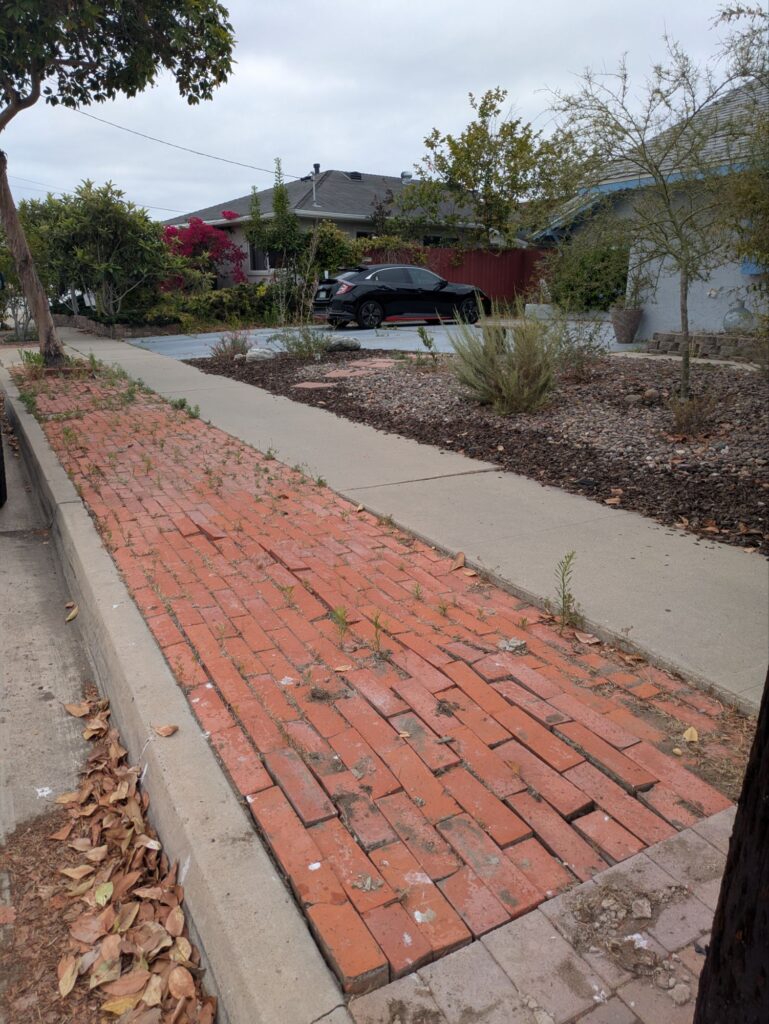
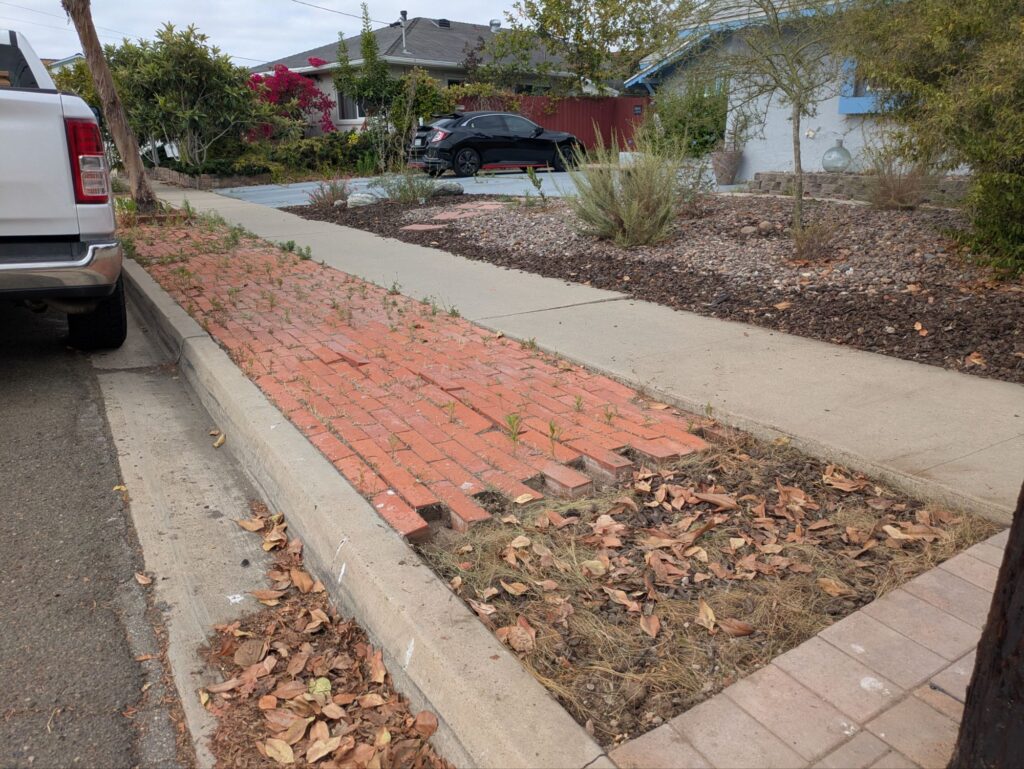
For many years, this front yard sidewalk strip has been lined with bricks. This year, the bricks will be replaced with a native plant garden to provide habitat for wildlife.
Phase 1: Ground Reclamation
During summer 2026, all of the bricks will be removed and replaced with soil and mulch. The top layer of compacted soil will be tilled to improve water absorption. The species inhabiting the bricks will be documented to show the habitat improvement after completion.
Equipment:
- Leather gloves
- Shovel
- Wheelbarrow
- Soil
- Plant cuttings and leaves
Current Cost: $0.00
Operational Log:
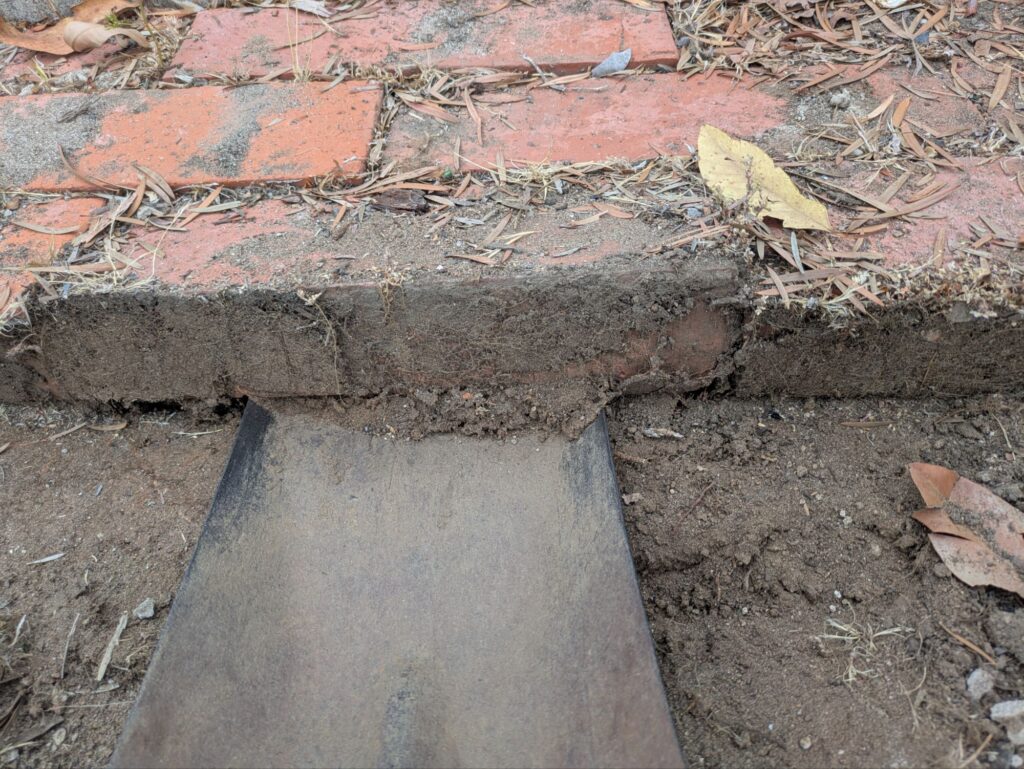
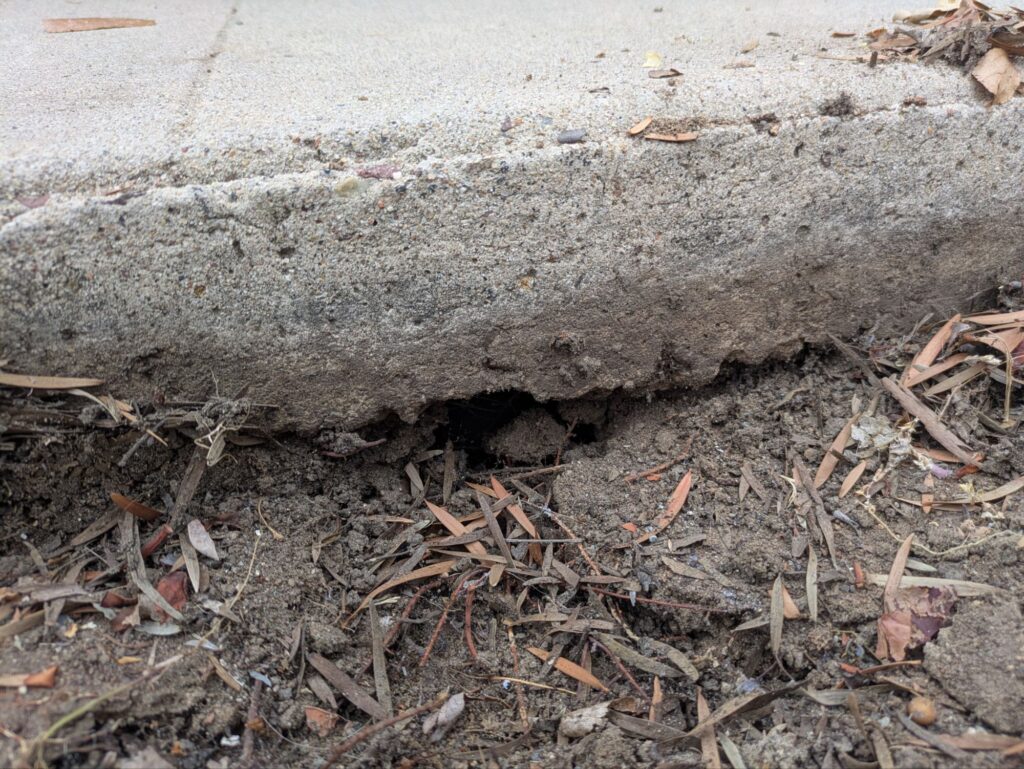
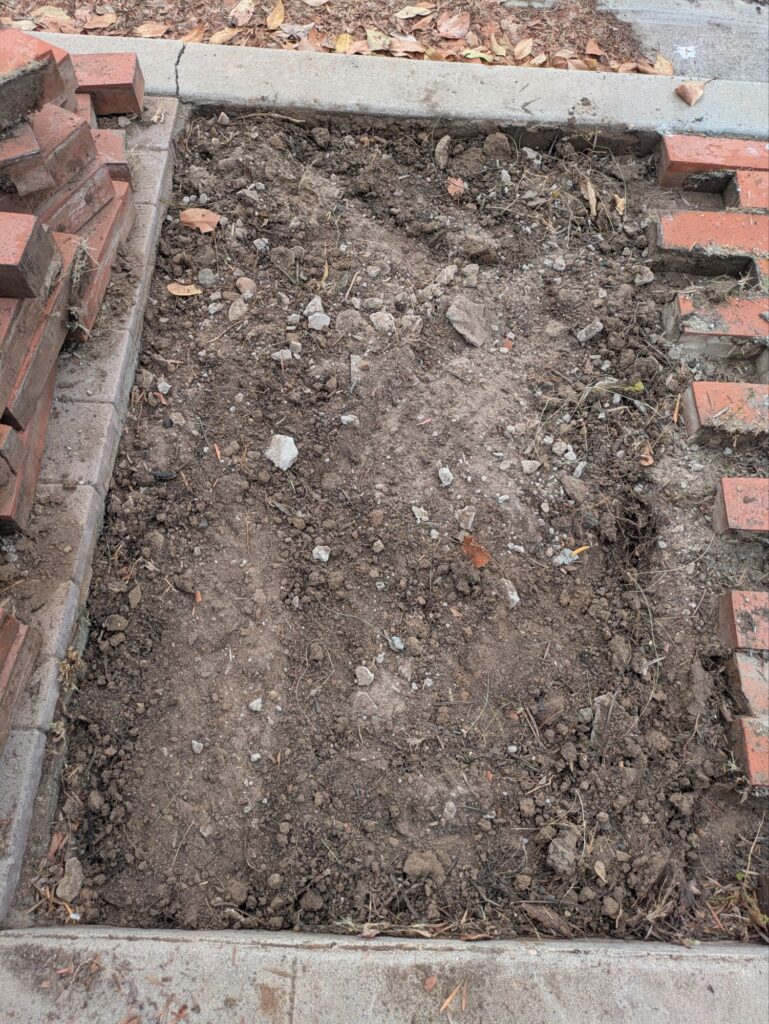
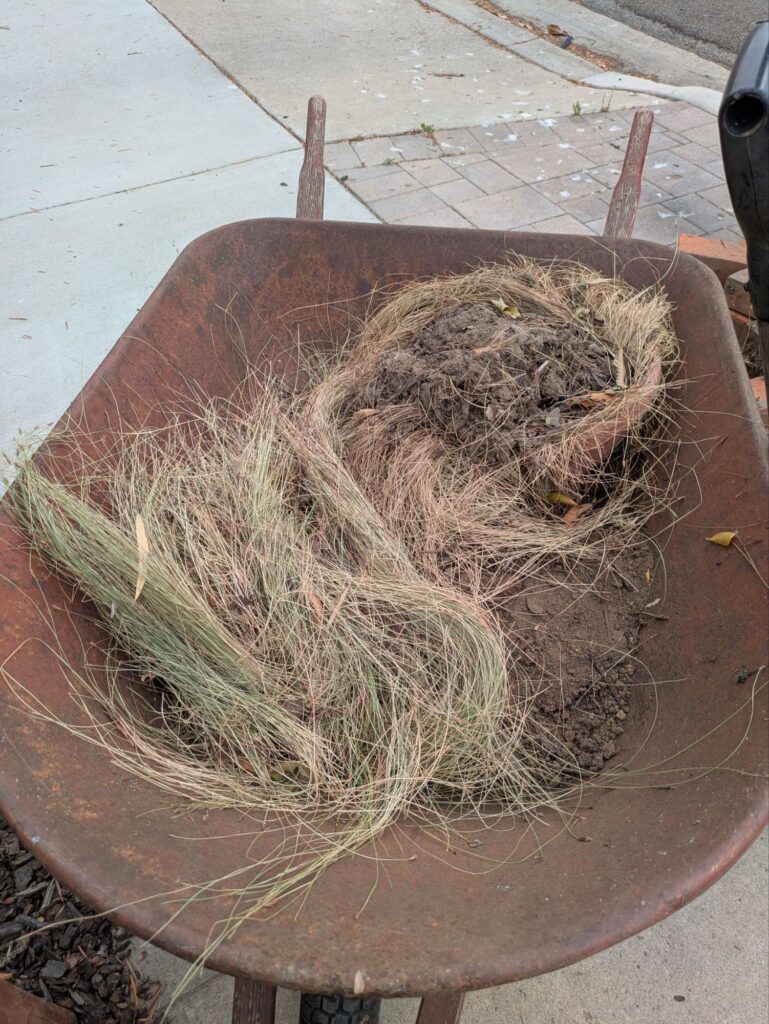
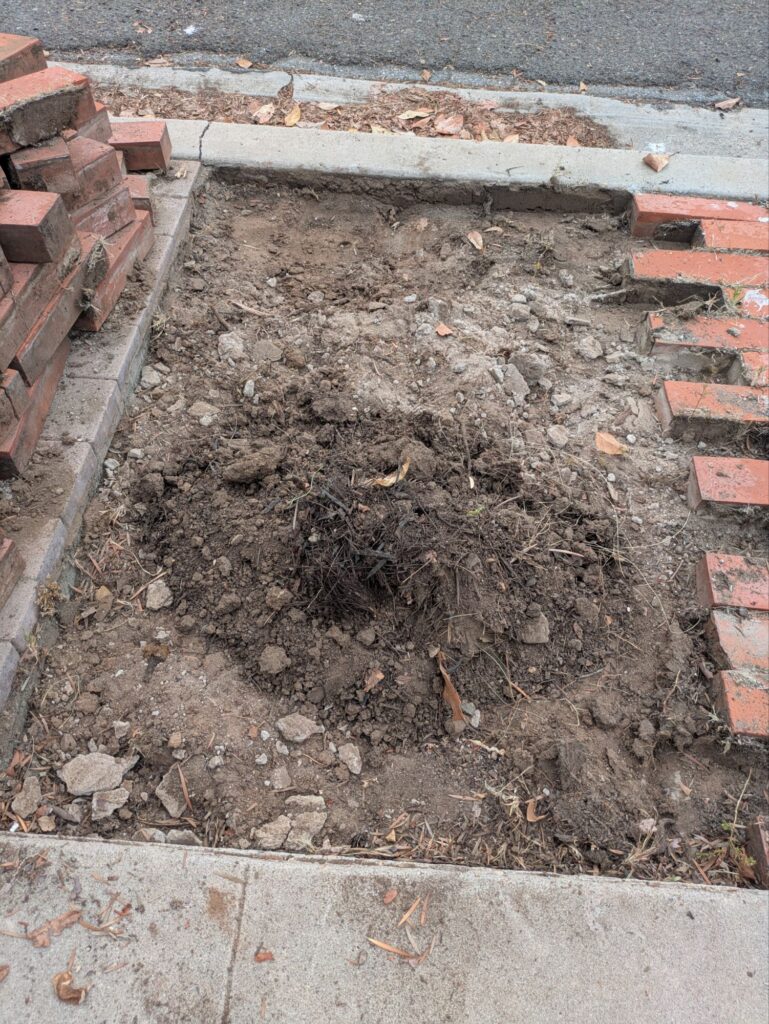
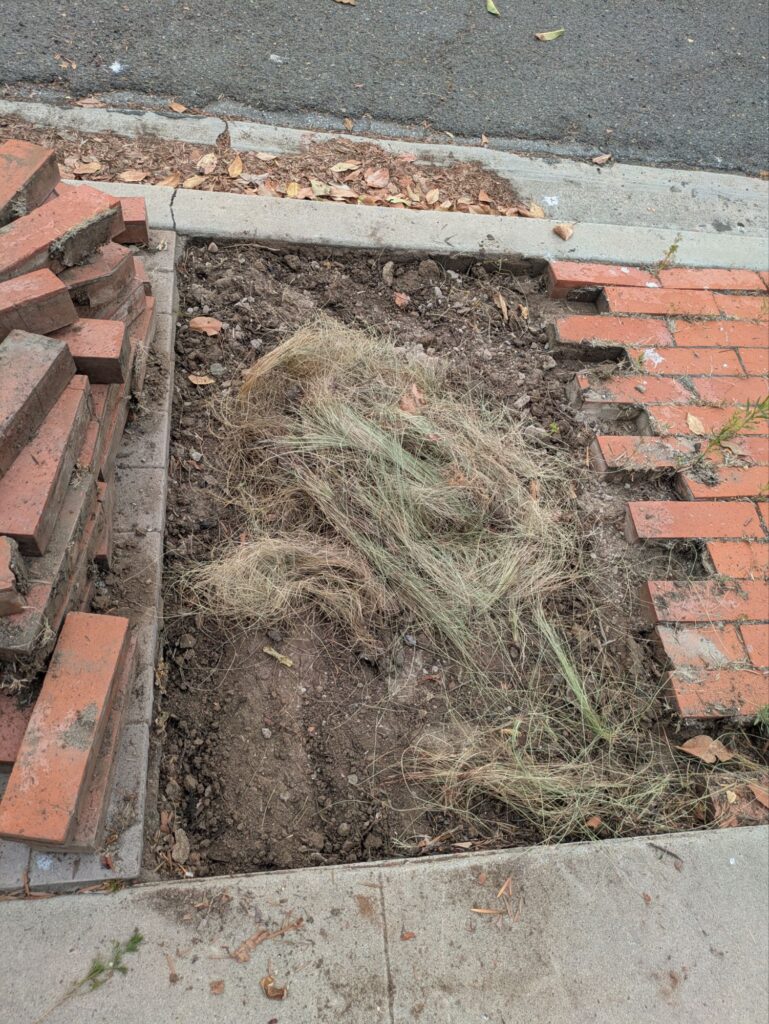
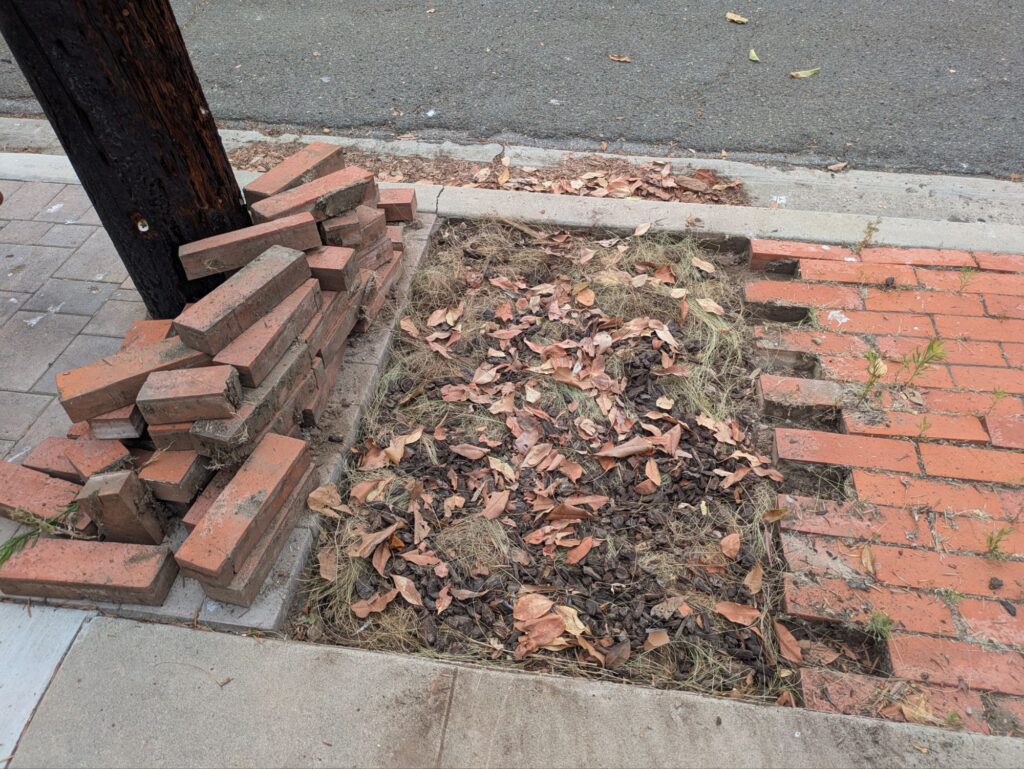
Today, a small section of brick removal and replacement was completed. Below are the steps that were followed for brick removal and ground reclamation. The mulch used today consisted of sand spike rush clippings, bark mulch, and tree leaves.


Species Observed:
- House Cricket (Acheta domesticus)
- Argentine Ant (Linepithema humile)
- Dark Rover Ants (Brachymyrmex patagonicus)
- South American Toothed Hacklemesh Weaver (metaltella simoni)
- Western Yellowjacket (Vespula pensylvanica) — not pictured —
- Horseweed (Erigeron canadensis)
- Prickly Lettuce (Lactuca serriola)
- Marsh Parsley (Cyclospermum leptophyllum)
- Dog Poop Fungus (Pisolithus arrhizus)
The bricks had been lifted recently to check that they were laid on top of dirt and not cemented down. Because the bricks had been there so long, dirt had filled in the crevices between them. When some of the bricks were removed and placed back, there were plenty of new gaps to provide hiding places for wildlife.
I remember this sidewalk strip used to be full of crickets, but when I first removed the bricks, I didn’t spot any. Today, there were crickets of many sizes everywhere. I believe it is reasonable to assume that they quickly reoccupied the little openings between and around the bricks.
Two yellowjackets visited while I was working. They flew around the freshly stacked brick pile before taking off. There were many Argentine ants occupying the area. I also noticed dark rover ants that were less than half the size of the Argentine ants. One of them is pictured on the same leaf as the Argentine ant. Due to its tiny size, it is not very visible in the picture. Both of these ants are invasive.
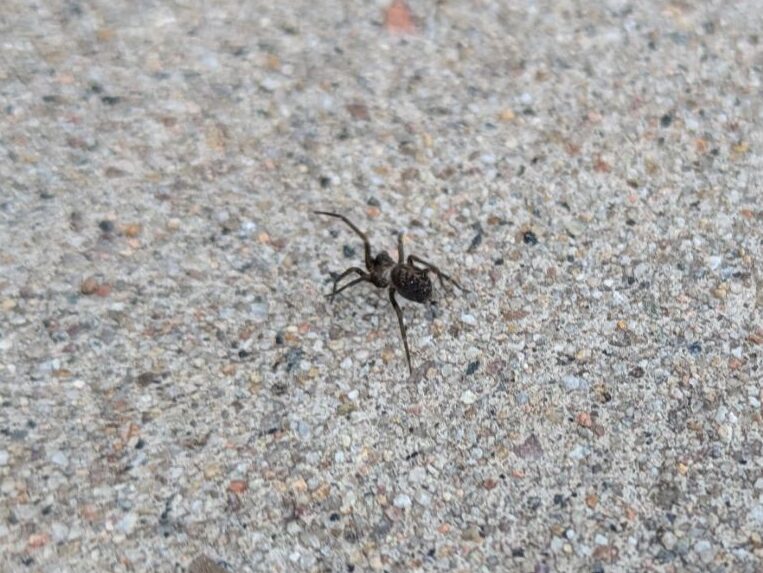
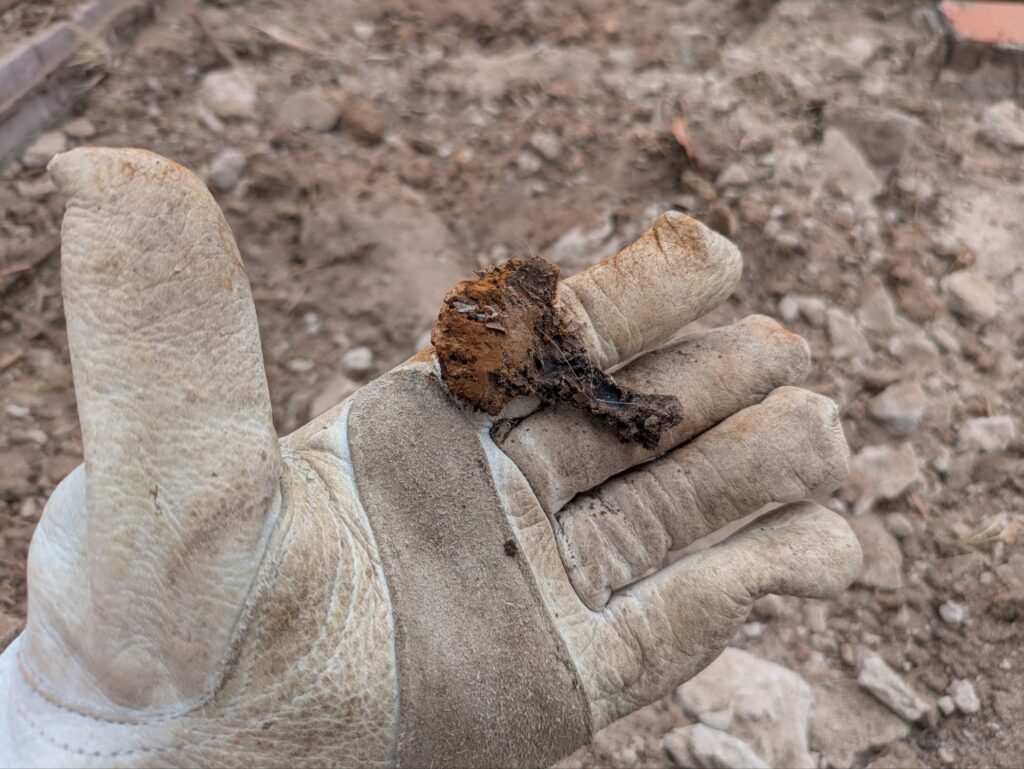
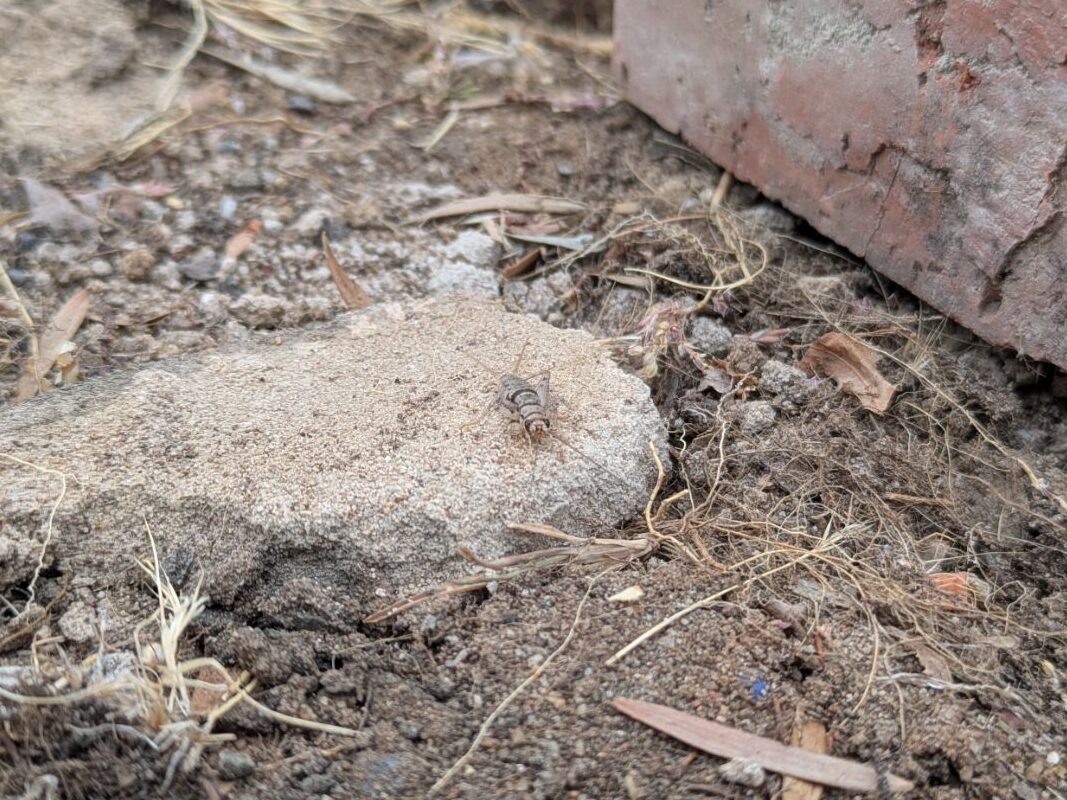
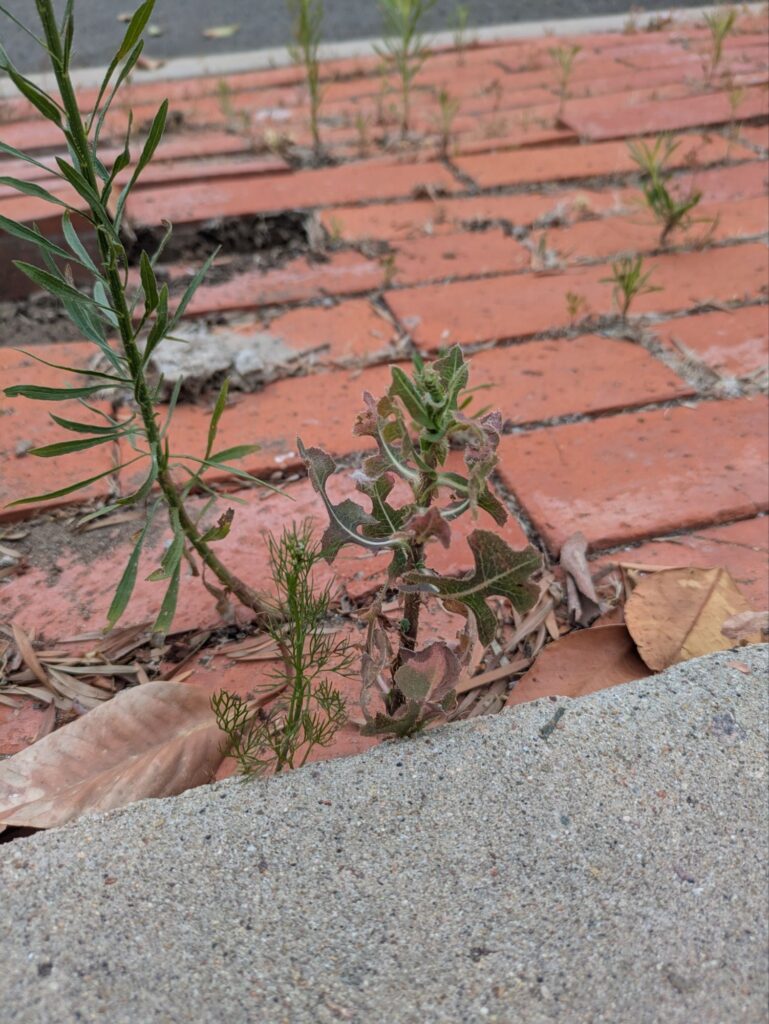
Prickly lettuce (Lactuca serriola)
Marsh parsley (Cyclospermum leptophyllum)
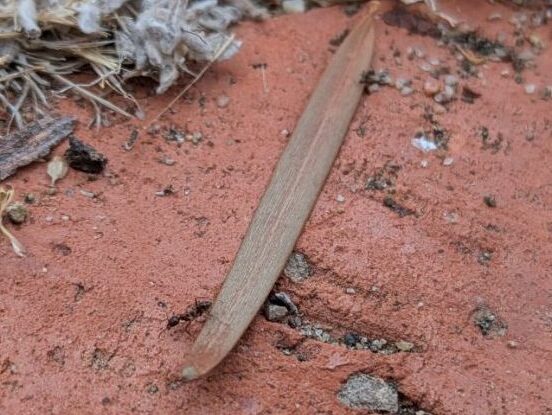
Argentine Ant (Linepithema humile)
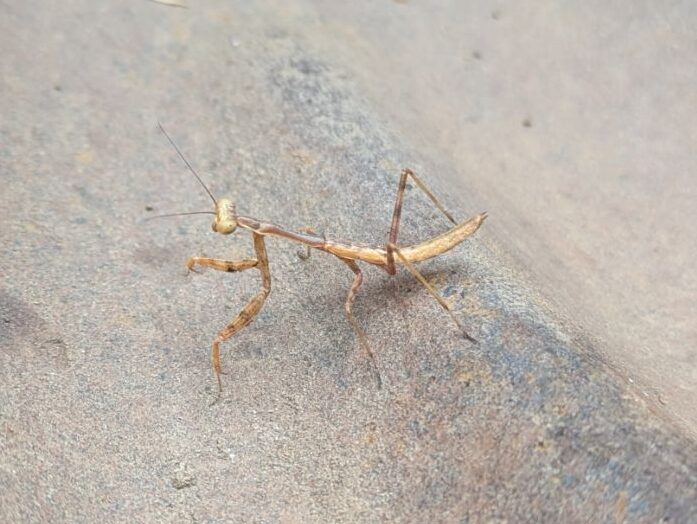
As a bonus, I spotted a California Mantis (Stagmomantis californica) in the side yard near some grasses.
Disclaimer: I identify species to the best of my ability, but incorrect identifications may occur.