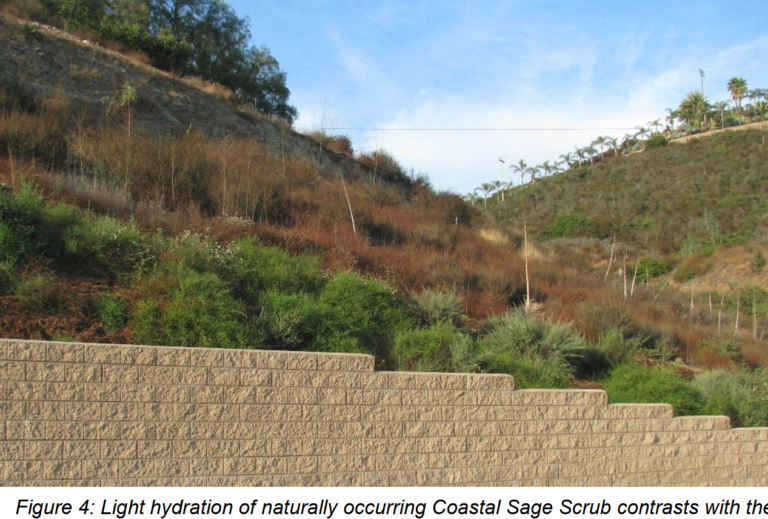

Tecolote Canyon consists of approximately 903 acres of wildlife habitat, representing a large area of fragmented urban wilderness. With recent reptilian visitors to my backyard wildlife pond bordering the canyon, I was inspired to read about the effects of habitat fragmentation on local wildlife.
The research cited below specifically explored how habitat fragmentation impacts reptile and amphibian diversity. Using pitfall traps over a three-year period to collect data on populations in the greater Los Angeles area, the study revealed some fascinating trends. Researchers found that small fragmented habitats (often with increased areas of open ground) had an increased abundance of side-blotched lizard (Uta stansburiana) populations, while their numbers in larger areas appeared to decline. This directly contrasted with most other species, which generally declined in abundance in smaller areas.

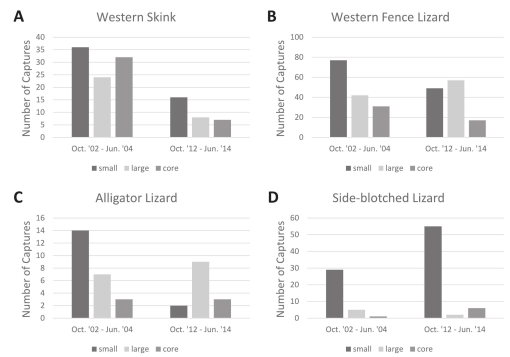
Looking at the data in figure 1, a few other patterns stood out. Western skinks (Plestiodon skiltonianus) are known to have small territories and do not move around a lot, and they seemed to suffer particularly hard during periods of drought. Conversely, California kingsnakes (Lampropeltis californiae) appeared to be highly adaptable to urbanization, surviving well even in smaller plots.
It was interesting to see how even some rare species managed to survive in these smaller, fragmented habitats. However, as noted in the paper, the long-term survival of species in these areas may be difficult to predict. Water access also played a crucial role in diversity and abundance. Wetland-dependent species struggled in small, fragmented areas, even if they had streams. The researchers hypothesized that the water may have been polluted with runoff from adjacent urban areas, thereby decreasing the overall quality of the habitat.
Source: Delaney, K. S., Busteed, G., Fisher, R. N., & Riley, S. P. D. (2021). Reptile and Amphibian Diversity and Abundance in an Urban Landscape: Impacts of Fragmentation and the Conservation Value of Small Patches. Ichthyology & Herpetology, 109(2), 424-435. https://doi.org/10.1643/h2019261